
Tax Law
Invoices as support for the deduction of costs or expenses for determining income tax
By: Pablo Giraldo A common concern among income tax filers is their ability to support their costs, expenses, or deductions. In income tax returns, the electronic sales invoice is the appropriate mech
By: Pablo Giraldo
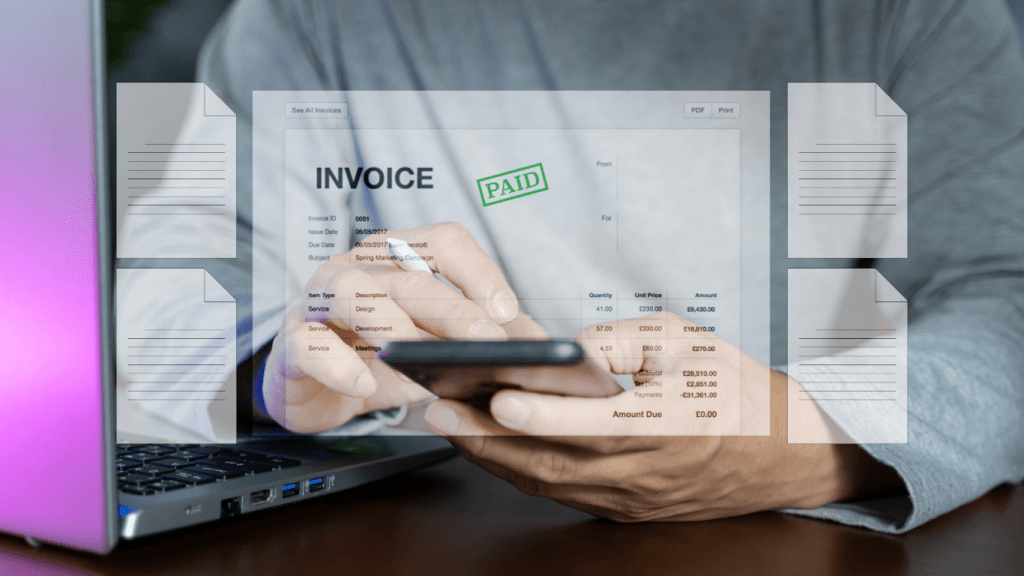
A common concern among income tax filers is their ability to support their costs, expenses, or deductions. In income tax returns, the electronic sales invoice is the appropriate mechanism to support them.
Some officials of the National Tax and Customs Directorate (Dirección de Impuestos y Aduanas Nacionales – DIAN) hold a restrictive position regarding the way in which these concepts can be supported, considering the invoice and its content as the only way to support costs, expenses, or deductions, provided they meet the requirements established in applicable regulations, such as the receipt of the invoice, or that evidence is shown on the invoice that the payment was executed through credit or debit card, with reference to the deduction contained in numeral 5 of Article 336 of the Tax Statute.
Recently, the tax authority issued Concept 006258 on September 5, 2024. In this document, DIAN addresses the possibility for self-employed individuals, who file under the general category, to deduct from their income the acquisition of goods or services, provided that, among other requirements, the expenses are supported by electronic invoices that meet the legal requirements and have been paid through credit or debit cards or any other authorized electronic means.
Specifically, the document responds to the inquiry about the possibility of deducting expenses supported by an invoice where payment in cash is recorded, but the taxpayer has evidence that this was a clerical error and has supporting documents that show payment was made through a debit or credit card or any other authorized electronic means.
The authority concludes that it is indeed possible to apply the mentioned deduction when filing the income tax return, provided that it can be proven that the payment was made through a debit, credit card, or any authorized electronic means and that the other requirements established by law are met. The authority bases its conclusion primarily on the fact that, although the way to verify compliance with this requirement is the content of the invoice, it is possible to take the deduction in cases where, although the generated information reflected a cash payment, the taxpayer actually paid through the electronic means authorized by law and has evidence of such payment.
This is in line with the principle of freedom of evidence, which guides procedural practice in general, according to which facts may be proven by any of the means of evidence listed in Article 165 of the General Code of Procedure, provided that the provisions of Article 743 of the Tax Statute, which refers to the adequacy of the means of evidence, are observed.
In this regard, we understand that, for DIAN, in order for the deduction of costs or expenses to be applicable, the taxpayer will have the invoice as the prima facie mechanism to demonstrate an economic event, without prejudice to the possibility of using alternative evidence mechanisms in the absence of proof in the content of the invoice.
Written by

Pablo Giraldo Cano
Associate at CMC. Works on Corporate, Contractual and Tax Law from the Medellín office.
View full profile- Published
- October 19, 2024
- Reading
- 2 min
- Area
- Tax Law
Related reading




Request a consultation